

On Rare Disease Day, we wear stripes! It is a moment to raise awareness about the millions, many of whom are children, living with rare conditions. The zebra is the symbol for Rare Disease Day. While each diagnosis is unique, many children with rare diseases face challenges in mobility, strength, coordination, and overall gross motor development. Pediatric physical therapy is crucial in helping these children maximize their abilities so they can live their best life!
How Pediatric Physical Therapy Helps
- 1. Promoting Independence
Many rare diseases impact muscle tone, range of motion, or coordination which makes it difficult for children to move independently. Physical therapists that specialize in working with children will help address muscle weakness, balance difficulties, and joint stiffness. They can also recommend adapted devices to help your child stand or walk better.
- 2. Managing Pain and Preventing Complications
Children with progressive or complex conditions may experience pain or muscle tightness. Stretching, strengthening, and positioning strategies guided by a pediatric physical therapist can reduce discomfort and prevent secondary complications.
- 3. Enhancing Participating in Daily Activities
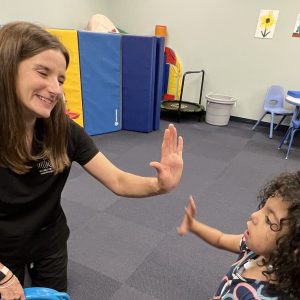
Whether it’s sitting, walking, or playing with friends and siblings, PT focuses on functional goals that allow children to engage in the world around them. Physical therapists use play-based techniques to make exercises fun and engaging. Early Intervention is essential for children with rare diseases to maximize their potential.
- 4. Supporting Caregivers and Families
Physical therapists work closely with families to provide education, home exercise programs, and strategies tailored to each child’s needs. As the child grows, the physical therapists plan with also grow with them adjusting as needed. They also collaborate with other healthcare providers to ensure a comprehensive plan.
Therapy for Specific Rare Diseases
While there are many rare diseases, here are a few examples of how Physical Therapy can support children with different conditions
- Spinal Muscular Atrophy (SMA): Strengthening, stretching, positioning techniques, and adaptive equipment can help optimize mobility
- Additional Support: https://www.curesma.org/
- Check out our blog here for additional details.
- Duchenne Muscular Dystrophy (DMD): Stretching, energy conservation techniques, positioning, and adapted equipment can support independence.
- Additional Support: https://cureduchenne.org/
- Cystic Fibrosis (CF): Endurance, strengthening, postural re-training, and stretching are a few examples that may be incorporated in a plan and progressed by a physical therapist to increase independence.
- Resources: ttps://www.cff.org/
- Friedreich’s Ataxia: Gait training, adapted equipment, balance training, and strengthening.
Did you know that 1 out 10 people are impacted by rare disease? Do you have experience with pediatric therapy for rare disease? Share your story in the comments!
If your child has a rare condition, our pediatric physical therapist can help! Contact Savannah Speech & Hearing Center for an Evaluation.
References: National Organization for Rare Disorders (n.d.). Home. Retrieved 2/28/25, from https://rarediseases.org

Leave a Reply