
Rolling, sitting and now crawling (oh my!). Crawling is one of the first mobility milestones. If you haven’t had a chance to attend our Crawling Champions class here in Savannah, GA this blog is for you! If your baby is not crawling yet, try slide, sitting, and strong stance– three key elements to help your baby move with more confidence. These elements are incorporated below as physical therapy tips for crawling.
Tummy Time Exercises for Crawling
Tummy time on the move: Your little one may have started reaching and pushing their arms straight while on their tummy, but now it’s time to get them moving or sliding. Below are a few skills we start to see before crawling on hands and knees:
- Pivoting: Spinning in a circle while on their tummy
- Army crawling: Moving themselves forward, but still on their tummy
How to Help Babies Transition from Back to Sitting
Transition from back to sitting: Now that baby has the strength to sit all by themselves, it’s time to learn to get into a sitting position. To crawl, baby needs to be comfortable supporting their body weight with one arm. Next time your little one needs to get into sitting, help them roll and push through one arm to achieve a sitting position.
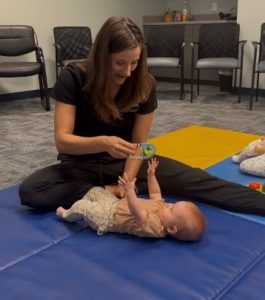
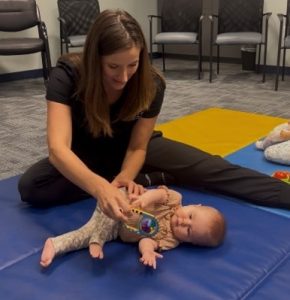
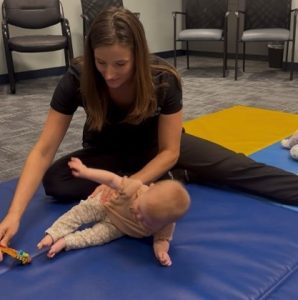

*Pediatric Physical Therapist helping baby practice getting into a sitting position
Strong Stance: Preparing for Crawling
Hands and knees practice: This position is also called quadruped. This is our strong stance, but it can be tough for a lot of little ones. Here are a few ways we can modify and progress it to lead to independent crawling:
- Kneeling at surface: A push toy is the perfect option because it has a small slant and engages the child with toys. Progress this position to a smaller elevation, like a couch cushion, book, or step.
- Hands and knees over a small towel or over your leg
- Mastered Hands and Knees? Next step is to practice reaching when in quadruped.

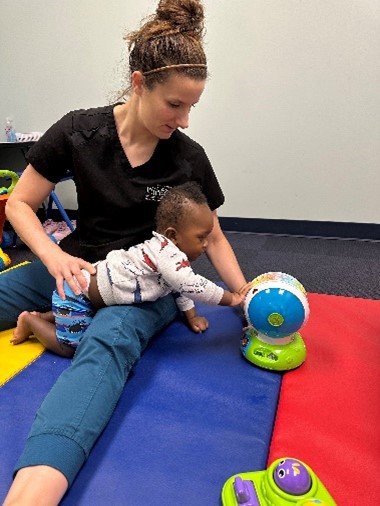
Picture A: baby working on an elevated quadruped position by using the push toy
Picture B: Pediatric Physical Therapist helping baby practice hands and knees over a leg for support. Here the baby is perfecting their reaching skills needed for crawling.
When should my baby start crawling?
While baby milestones are a range, most babies will crawl between 7-10 months. Try these out and let us know in the comments if it was the secret sauce to get your baby crawling. Just remember: “slide, side, and strong stance!” If your baby isn’t showing signs of crawling by 10 months, this is a good topic to bring up with your Pediatrician or a Pediatric Physical Therapist. By incorporating these crawling exercises, you’ll start building the strength they need for lifelong movement success! A great resource is the CDC milestone checker. Try this link if you are wondering what else your child should be doing around 9 months.
Want more tips?
If you’re looking for a pediatric physical therapist in Savannah, GA or the surrounding areas to help your baby meet milestones like crawling, sitting, and walking our team at Savannah Speech & Hearing Center can help.

Leave a Reply