Torticollis and plagiocephaly can sound scary. Torticollis has been reported in 4-16% of newborns. It is believed that positioning in utero can contribute to torticollis. The great thing is both torticollis and plagiocephaly can be treated.

Torticollis: A change in your baby’s posture due to a tight muscle on the side of your neck. This often results in the head tilting to one side and rotating to another side.
Plagiocephaly: A flat spot on one side of the head.
Early diagnosis and treatment is critical!
The good news is this is often present at birth or noticed very shortly afterward. This means you can start treatment right away. Research shows that early treatment results in quicker resolution of symptoms. If you start Physical Therapy before 1 month of age, normal range of motion was noted in only 1.5 months!! However, if you wait until after 1 month, treatment may extend to 6 months. This becomes harder to treat and resolve as your child gets older.
Your pediatrician will help you monitor symptoms at your well visits. However, parents know their baby the best and you can help monitor. There are some babies that are more at risk for developing torticollis. If your child has any of the following risk factors, you can be proactive and keep a close eye on them.
- Longer length
- Breech position
- Use of forceps during delivery
Things to look out for with Torticollis
- Always looking one direction
- The body and/or head tilting to one direction
- Difficulty latching during feeds or difficulty latching on one side
- Facial Asymmetries (ear shift, different eye shapes, fullness of cheeks)
- Asymmetrical head shape
FREEBIE tips for the win!
While waiting for a PT visit, try starting with tummy time. This is a great way to strengthen and stretch your child’s neck. Need some tips and tricks for tummy time? Check out our tummy time blog here. Environmental changes can also be very powerful. Here is a checklist of ways to help your baby look both ways throughout the day:
- Switch ends of the crib, bassinette, and changing table that you place your child on
- Place the toys on the left or right side of your child (the side they have a harder time looking at)
- Switch arms that you carry your child in
- Offer nursing and/or the bottle on both sides
- Encourage your child to look left and right during play. Have them follow a rattle or your face as far to the left AND right they can go.
Physical Therapy is the best way to treat Torticollis
I scheduled my physical therapy evaluation, now what?! The American Academy of Physical Therapy Association (APTA) has released something called “Clinical Practice Guidelines” or CPG. This is almost a blue print for physical therapists. It helps increase consistency in the field by looking at the research. In 2018, the APTA updated the 2013 CPG for torticollis. A few tests that your child may experience are the following:


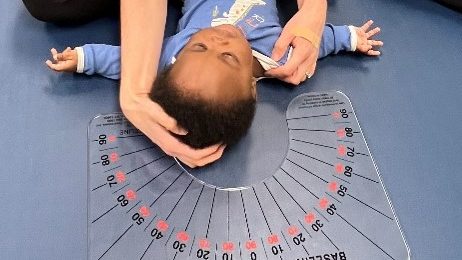
- Arthrodial protractor to assess neck range of motion (as seen in the photo)
- Still photos to quantify the amount of tilt
- Muscle function test to assess your child’s trunk and neck muscles
- Gross motor assessment to check your child’s milestones
- Posture assessment while on their back, tummy, sitting, and standing
- Head measurements with calipers (to assess for plagiocephaly) as seen in the picture.
- Severity: your PT may grade the severity by a 1-8 scale that is based on your child’s age at evaluation and range of motion limitation. This is important because it will help with visit recommendations and help provide expectations for expected time of resolution.
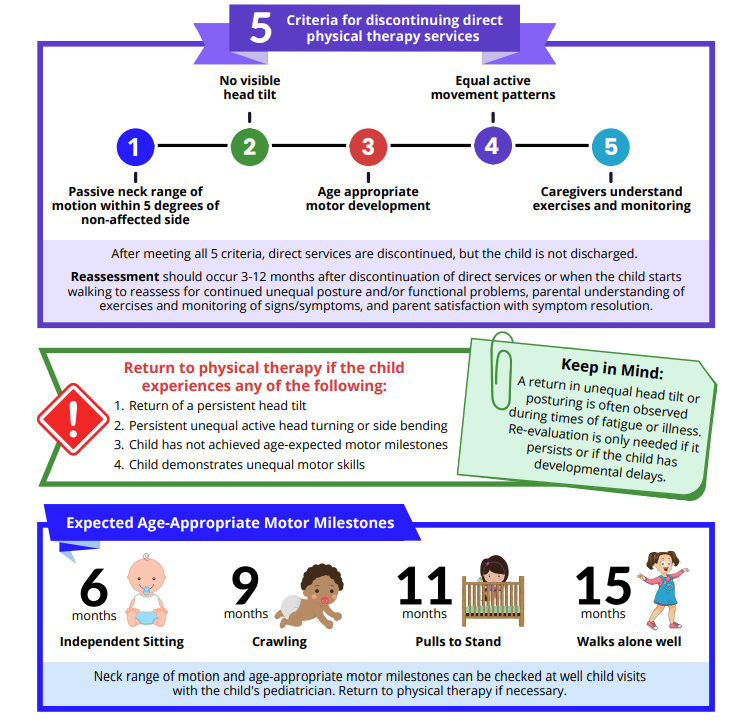
The CPG even established discharge criteria! This is a great way to know when your child is done with physical therapy. The care guidelines recommend monitoring babies with torticollis until 1 year of age or until walking is achieved. This may mean a re-evaluation after your child has met the discharge criteria, or even monthly check ins pending the plan you established with your PT. Check out this awesome handout that the APTA developed:
Unsure if your child has Torticollis or Plagiocephaly? No problem. Schedule a physical therapy evaluation and we can complete a comprehensive assessment of your child. We will look at range of motion, strength, and posture. At Savannah Speech and Hearing, we schedule 60 minute session to allow for education and set up of any exercises that may benefit your child even if they don’t end up needing physical therapy treatments.
References
Kaplan SL, Coulter C, Sargent B. Physical Therapy Management of Congenital Muscular Torticollis: A 2018 Evidence-Based Clinical Practice Guideline From the APTA Academy of Pediatric Physical Therapy. Pediatr Phys Ther. 2018 Oct;30(4):240-290. doi: 10.1097/PEP.0000000000000544. PMID: 30277962; PMCID: PMC8568067.

Leave a Reply